Whisper Campaigns: The Disciplined Art of Growing an Exclusive Community Without Diluting Its Mystique
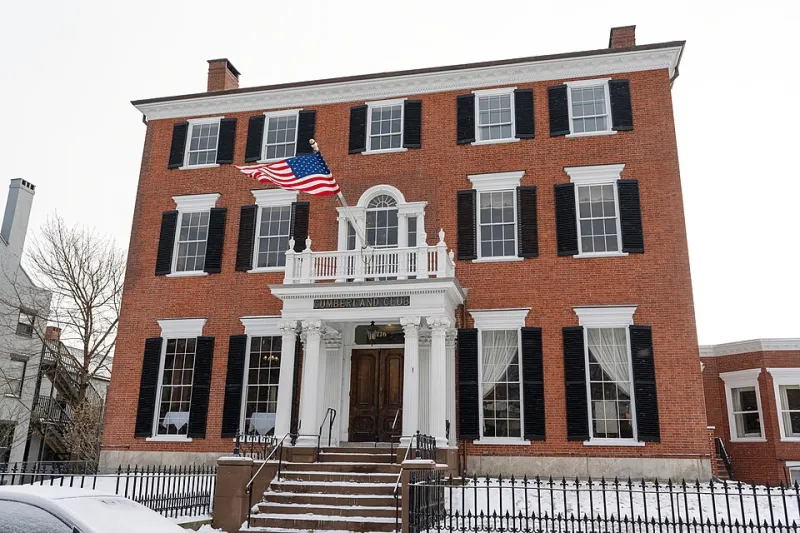
Photo: Quintin Soloviev, CC BY 4.0, via Wikimedia Commons
Growth, for most organizations, is an unambiguous goal. More members, more revenue, more reach — the standard metrics of institutional health apply without complication. For an exclusive membership community, however, growth is a problem that must be solved with unusual care. Expand too aggressively, and you erode the scarcity that gives the community its value. Remain too static, and you risk irrelevance. The organizations that navigate this tension most successfully do so through a discipline that might best be described as strategic restraint.
At Amar Club, where the integrity of the member experience is non-negotiable, this tension is not theoretical. It shapes every decision about how the community presents itself to the world beyond its walls.
The Paradox of Visible Invisibility
The foundational challenge facing any elite community seeking measured growth is one of signal management. The goal is not to be unknown — obscurity serves no one — but to be known in precisely the right way, by precisely the right people, at precisely the right moment. This requires a communications posture that most conventional marketing frameworks are not designed to accommodate.
Brand strategist and private club consultant Theodore Hargrove, who has worked with invitation-only venues in San Francisco, Chicago, and New York, describes the approach as "visible invisibility." The community must generate enough cultural presence to attract worthy prospects while maintaining the opacity that signals genuine exclusivity. "The moment a club starts explaining itself," he notes, "it has already lost something essential. The best communities let their members do the explaining — selectively, and on their own terms."
This is the soft launch philosophy in its most refined form: not a campaign, but a posture. Not a message, but a mood.
The Gatekeeper as Brand Ambassador
In the absence of conventional advertising, exclusive communities rely on a specific category of individual to carry their reputation into new social terrain: the cultural gatekeeper. These are not influencers in the contemporary digital sense — their authority does not derive from follower counts or algorithmic visibility. Rather, they are individuals whose social credibility within a defined milieu is sufficiently established that their endorsement functions as institutional validation.
A recommendation from the right art director, the right venture partner, or the right philanthropist carries more weight than any paid placement. It arrives pre-loaded with trust, contextual relevance, and the implicit message that the recommender has applied their own discernment before extending the introduction. For the prospective member, this is enormously meaningful: the invitation itself is a form of vetting.
Communities that master this dynamic invest significantly in the experience of their existing members — not merely to retain them, but because satisfied members who feel genuine ownership over the community's identity become its most effective and authentic recruiters. The referral is not engineered; it is earned.
Case Studies in Calibrated Expansion
Several of America's most respected private entertainment and social communities have demonstrated how this model functions in practice.
One prominent members-only performance venue in lower Manhattan has maintained a waitlist for over four years without ever purchasing a single advertisement. Its growth strategy consists almost entirely of a structured member-referral process in which existing members may nominate a limited number of candidates annually. The scarcity of the nomination itself — each member receives only two per year — ensures that referrals are made with genuine care. The result is a community whose new members arrive already aligned with its values, having been pre-selected by someone who understood the stakes of the recommendation.
A private social club operating across three US cities employs a different but equally deliberate method: periodic, curated public appearances at cultural events — gallery openings, literary festivals, select charity galas — where members gather visibly but without explicit representation of the club itself. The association is implied rather than announced. Those who notice, and who are curious enough to pursue the thread, have already demonstrated the kind of attentiveness the community values.
The Brand Signal That Speaks Without Speaking
Beyond individual gatekeepers and referral architecture, elite communities communicate through a more ambient form of brand signaling — the aesthetic and behavioral codes that mark their members as belonging to a particular social register. This might manifest in the quality of printed materials distributed at private events, the deliberate restraint of a website that offers atmosphere rather than information, or the consistent elegance of member communications that never oversell.
These signals are not legible to everyone, and that is precisely the point. They are calibrated to resonate with the specific sensibility the community is designed to attract. Those who respond to them self-select in a manner that no demographic targeting could replicate. The brand, in this sense, is its own filter.
At Amar Club, this philosophy is embedded in every touchpoint — from the cadence of member correspondence to the curation of programming that speaks to a particular quality of aspiration. The goal is never volume. It is resonance.
Growing Without Compromising
The soft launch is ultimately a philosophy of patience applied to community building. It acknowledges that the most valuable things cannot be rushed into existence, and that the communities most worth belonging to are those whose growth is governed by the same standards that govern their membership.
For organizations committed to this standard, the discipline required is considerable. It means declining certain partnerships, resisting certain shortcuts, and trusting that the right members — the ones whose presence will genuinely enrich the community — will find their way to the threshold when the conditions are properly set.
This is not a passive strategy. It is an active, ongoing commitment to protecting the integrity of what has been built. And in a cultural moment saturated with platforms competing for attention at any cost, that commitment is itself a form of distinction.