The Architecture of Rejection: What Elite Membership Committees See Before They Say Yes
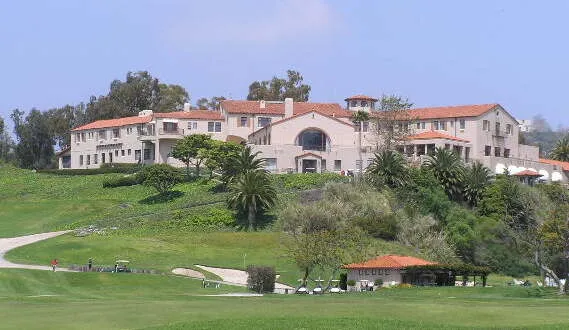
Photo: Dan Perry from Chicago, USA, CC BY 2.0, via Wikimedia Commons
Thousands apply. A handful are chosen. The remainder receive a polite, carefully worded letter that reveals almost nothing about why they were passed over—and that opacity is entirely by design.
At the most sought-after private clubs and curated communities across the United States, the selection process is less a bureaucratic exercise and more an act of cultural curation. The individuals responsible for these decisions—membership directors, founding committees, and trusted community stewards—operate with a discretion that borders on the ceremonial. And yet, their methodology is far more structured than outsiders tend to assume.
Wealth Is the Floor, Not the Ceiling
The first misconception that aspirants carry into the application process is that financial qualification is the primary hurdle. It is not. For communities operating at the highest tier of exclusivity, financial thresholds function merely as baseline screening tools—necessary, but wholly insufficient.
"We stopped reviewing financial disclosures as meaningful differentiators years ago," explains one membership director at a private social club in Manhattan who requested anonymity to speak candidly. "Everyone who reaches our desk has resources. What we're actually asking is: does this person make the room better? Do they contribute something that cannot be purchased?"
This shift in emphasis—from net worth to net contribution—reflects a broader philosophical evolution within elite communities. The most coveted memberships in cities like New York, Los Angeles, Chicago, and Miami are increasingly structured around the concept of cultural dividend: the measurable or felt enrichment a member brings to the collective experience.
The Composite Portrait
Membership committees rarely evaluate a single application in isolation. Instead, they construct what many in the field describe as a "composite portrait"—a layered picture assembled from formal documentation, sponsor testimony, social observation, and in some cases, in-person evaluation events designed to feel entirely casual.
A community builder who oversees membership for a curated network of creative and entrepreneurial professionals in Los Angeles describes the process this way: "We're looking at the shape of someone's attention. What do they find interesting? How do they treat people who have nothing to offer them? Are they genuinely curious, or are they performing curiosity because they think that's what we want to see?"
This emphasis on authentic engagement over performed sophistication is a recurring theme among gatekeepers. Elite communities have developed a refined sensitivity to the difference between someone who belongs and someone who has studied belonging. The latter, however well-prepared, rarely passes through the final stage of evaluation.
The Social Fingerprint
Beyond formal applications, committees frequently examine what might be called a candidate's social fingerprint—the pattern of relationships, affiliations, and behaviors that precede any formal expression of interest. This is not surveillance in any sinister sense, but rather an acknowledgment that how someone moves through the world before they seek entry tells a more honest story than any curated application package.
Sponsors and existing members are often asked to provide not just endorsements but detailed observational accounts. How did this person behave at the dinner where they were introduced? Did they dominate conversation or create space for others? Were they present, or were they networking?
"The best candidates we've ever admitted were people who weren't obviously trying to get in," notes one founding member of a private arts and ideas community based in Chicago. "They were absorbed in the conversation. They were generous with their attention. The membership was almost incidental to who they already were."
The Disqualifying Qualities
Just as revealing as what committees seek is what they actively screen against. Across multiple conversations with gatekeepers and community architects, certain disqualifying qualities emerge with consistency.
Transactional orientation—the tendency to evaluate every interaction for its immediate utility—is perhaps the most commonly cited red flag. Communities built on genuine connection have little tolerance for members who approach relationships as ledgers to be balanced.
Status anxiety presents a related concern. Applicants who appear primarily motivated by the prestige of membership, rather than the substance of what the community offers, tend to become disruptive presences once admitted. They are perpetually performing for an audience rather than participating in a shared experience.
Overexposure is another consideration. In an era of relentless self-documentation, candidates whose public profiles suggest an appetite for visibility that conflicts with the community's ethos of discretion are frequently passed over, regardless of other qualifications.
The Deliberation Room
The actual mechanics of committee deliberation vary considerably from one organization to another, but the tone tends toward the measured and the thorough. Some communities employ formal scoring rubrics. Others rely on extended discussion and the gradual emergence of consensus. A few maintain the tradition of the blackball—a single dissenting vote sufficient to block admission.
What unites these varied processes is a shared commitment to protecting the community's existing culture. Committees are acutely aware that each new member has the potential to shift the collective dynamic, and they take that responsibility seriously.
"We think of every admission as a permanent addition to the DNA of this place," says one membership director. "You can ask someone to leave, but the impact of their presence doesn't fully disappear. So we'd rather move slowly and be certain than move quickly and regret it."
What Rejection Actually Means
For those who receive the polite letter of decline, the experience can be disorienting—particularly when no specific reason is offered. But gatekeepers are consistent in their view that detailed rejection feedback would undermine both the integrity of the process and the dignity of the applicant.
More importantly, rejection is rarely permanent. Many of the most valued members of elite communities were declined on their first application and admitted years later, after further relationship-building, personal evolution, or simply a shift in the community's composition that created a more natural fit.
The process, in other words, is not a verdict. It is a moment in an ongoing conversation between an individual and a community—one that rewards patience, authenticity, and a genuine alignment of values over the long arc of time.
At Amar Club, this philosophy of deliberate, values-driven selection is not merely a policy. It is the foundation upon which every meaningful connection within these walls has been built.