Performing for the Few: How America's Most Celebrated Artists Are Choosing Intimacy Over Arenas
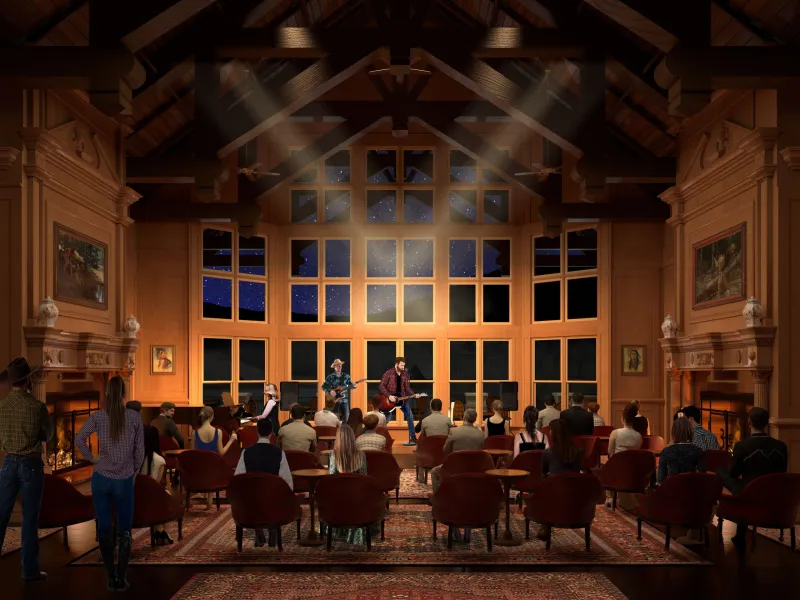
There is a particular kind of silence that settles over a room of forty people when a world-renowned musician walks onto a small stage without fanfare. No pyrotechnics. No stadium lighting rigs. No opening act. Just the artist, an instrument, and a room of individuals who were specifically chosen to be there. This is the experience that a growing number of America's most celebrated performers are now deliberately engineering — and it is changing the definition of what a meaningful performance can be.
The Departure from the Traditional Circuit
For decades, the touring circuit served as the primary measure of an entertainer's relevance. Grossing hundreds of millions across dozens of cities, selling out Madison Square Garden or the Hollywood Bowl — these were the benchmarks against which careers were measured. Yet a discernible shift has been underway among a particular tier of artist: those who have already conquered the arena and are now asking a different question entirely.
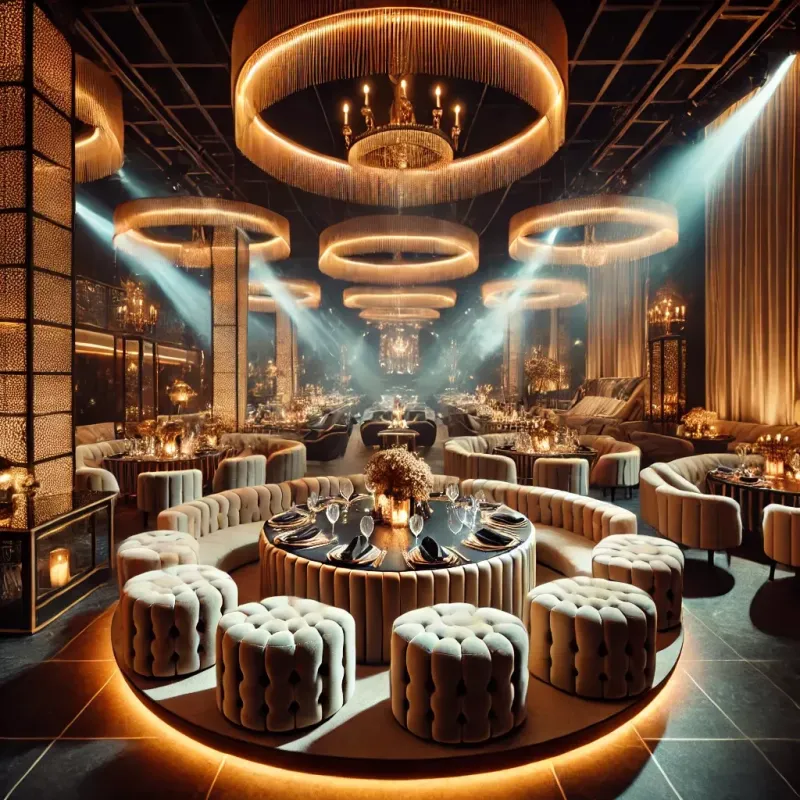
Rather than asking how many people can attend, these performers are asking who should attend, and under what conditions the performance will carry the most meaning. The result is a growing ecosystem of private performance series — invitation-only concerts, curated comedy evenings, and intimate theatrical presentations hosted in private residences, historic club rooms, boutique hotels, and members-only venues across the country.
These are not low-budget affairs born of diminished commercial appeal. They are deliberate artistic choices made by individuals who no longer need to prove their reach and are instead focused on deepening their craft and their relationships with the audiences who matter most to them.
Reclaiming Creative Sovereignty
One of the most compelling motivations behind this movement is the restoration of creative control. The economics of large-scale touring demand compromise at nearly every level — set lists are designed for maximum crowd accessibility, staging choices are constrained by venue specifications, and the artist's vision is frequently subordinated to the logistics of production at scale.
In a private performance setting, those constraints dissolve. An artist might choose to perform an entire album chronologically, explore unreleased material, or incorporate spoken-word elements that would be lost in a cavernous arena. The intimacy of the setting permits artistic risk-taking that a mainstream audience of twenty thousand would neither reward nor tolerate.
This dynamic is particularly evident among jazz and classical musicians who have long operated in the space between commercial accessibility and artistic depth, but it is increasingly visible among pop, country, and even stand-up comedy performers who have found that a room of fifty engaged listeners offers more creative freedom than a sold-out amphitheater.
The Audience as Collaborator
What distinguishes these private series from ordinary small-venue performances is the intentionality with which audiences are assembled. The guests at these events are not simply ticket buyers who moved quickly enough to secure a seat. They are individuals selected — often through a combination of relationship, demonstrated engagement, and cultural alignment — to participate in something that functions more like a conversation than a concert.
This curation transforms the audience from passive observers into active participants in the artistic experience. When a performer knows that every person in the room has been deliberately included, the psychological dynamic shifts. There is a mutual accountability that elevates both the performance and the reception of it.
For communities like Amar Club, this principle is foundational. The most meaningful experiences emerge not from scale but from the quality of the gathering — from the sense that every individual present belongs there, and that their presence contributes to something greater than the sum of its parts.
The New Calculus of Success
The financial architecture of private performance series often surprises those accustomed to thinking about entertainment economics in terms of ticket volume. While the audience size is dramatically smaller, the value exchange operates on an entirely different plane. Attendance at a curated private performance can command a premium that reflects not just the entertainment itself but the exclusivity of access, the quality of the surrounding experience, and the implicit social capital of having been included.
For the artist, the calculus is equally compelling. A single evening with a hand-selected audience of high-engagement patrons — individuals who may become long-term supporters, collaborators, or advocates — can generate more meaningful career capital than a month-long tour playing to anonymous crowds.
This is the insight that the most sophisticated performers have internalized: visibility and reach are not synonymous with impact. A performance witnessed by forty people who are genuinely moved, who speak about it for years, and who carry that experience into their own networks, may ultimately prove more consequential than a performance witnessed by forty thousand who have already moved on to the next notification on their phones.
What This Means for the Future of Live Entertainment
The rise of the private performance series is not a rejection of mainstream entertainment. It is, rather, an acknowledgment that the entertainment landscape is broad enough to sustain multiple models simultaneously — and that the most discerning artists and audiences are gravitating toward the model that prioritizes depth over breadth.
For members of exclusive communities and clubs, this trend represents an extraordinary opportunity. As more artists explore the private performance format, the experiences available to those with access to curated networks are becoming genuinely extraordinary — evenings that exist outside the public record, that cannot be replicated, and that carry a particular weight precisely because they were never intended for everyone.
The encore, in this context, is not a crowd-pleasing gesture at the end of a stadium show. It is an invitation extended to a select few — to witness something true, something considered, and something that will not be seen again.