The Inner Circle: Unwritten Rules and Real Connections at Elite After-Event Gatherings

Photo: Ministry of Petroleum and Natural Gas, GODL-India, via Wikimedia Commons
The public narrative surrounding high-profile entertainment events tends to focus on what is visible: the arrivals, the performances, the carefully staged photographs. What that narrative consistently overlooks is where the real substance lies — in the hours that follow, in spaces that most people will never see, among groups small enough for genuine conversation to actually occur.
For members of exclusive communities such as Amar Club, access to these post-event social environments is not incidental to the membership proposition. It is, in many respects, central to it.
Why After-Parties Are Not What You Think They Are
The word after-party carries certain cultural connotations — excess, noise, the performative socializing of people who wish primarily to be seen. That image, while not entirely without basis in certain circles, fundamentally misrepresents the private gatherings that take place within elite membership communities.
At the highest levels of cultural and professional life in the United States, post-event gatherings serve a specific and serious function: they are the venues in which relationships are initiated, deepened, and converted into lasting professional and personal alliances. The informal setting — a private residence in the Hollywood Hills, a reserved floor of a distinguished New York club, a waterfront estate in the Hamptons — creates precisely the kind of psychological openness that formal networking events, with their name tags and structured agendas, systematically destroy.
People are more themselves at eleven o'clock at night, after a shared cultural experience, than they are at a morning conference. That simple truth is the foundation upon which elite social ecosystems are constructed.
The Architecture of Meaningful Encounter
Not all exclusive gatherings are created equal. The difference between an after-event reception that generates genuine connection and one that merely aggregates impressive résumés lies almost entirely in design — the deliberate, thoughtful construction of an environment in which authentic interaction becomes the path of least resistance.
Several architectural principles distinguish the most effective elite social gatherings.
Controlled scale is perhaps the most critical variable. The instinct of many hosts is to extend the guest list — more impressive names, more social capital in one room. The counterintuitive wisdom of experienced community builders is precisely the opposite. A gathering of thirty carefully selected individuals, each of whom brings genuine substance and a willingness to engage, will consistently outperform a gathering of three hundred in terms of the quality and durability of connections formed.
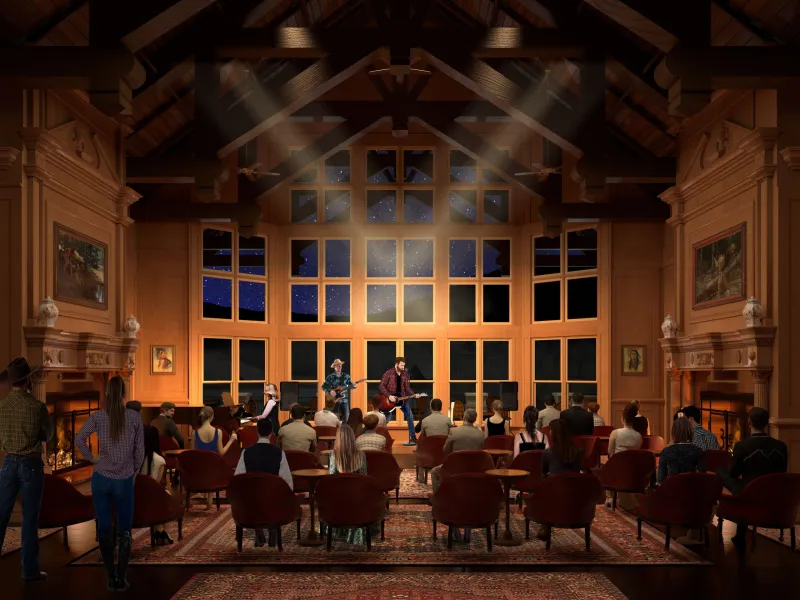
Environmental intentionality matters more than most people acknowledge. The physical space of a gathering communicates expectations to its occupants. A sprawling venue with multiple separate rooms encourages fragmentation and the gravitational clustering of existing social groups. A more intimate, well-designed space — with comfortable seating arranged to facilitate conversation rather than performance — sends a different signal entirely. It says: this is a place for exchange, not exhibition.
Temporal structure is a subtler but equally important consideration. The most skillfully managed elite gatherings have a rhythm — an arrival period, a central shared experience (a brief performance, a chef's presentation, a notable speaker offering a few informal remarks), and then an extended, unstructured social period during which the shared experience serves as natural conversational currency. This structure prevents the social paralysis that can afflict even confident individuals when dropped into a room of strangers with no shared reference point.
The Unwritten Rules That Everyone Knows
Every social ecosystem has its governing norms. The elite entertainment and membership community world is no exception, and understanding these conventions is essential for anyone seeking to navigate it with grace.
The first and most fundamental rule is the primacy of discretion. What is said in a private gathering remains there. This is not merely a courtesy — it is the foundational compact that makes candid conversation possible. When participants trust that their remarks will not be broadcast, attributed, or weaponized, they speak more honestly and more interestingly. The enforcement mechanism is not legal but social: those who violate this norm find themselves quietly excluded from future invitations. In a world where access is the currency, exclusion is a severe penalty.
The second convention concerns the suppression of transactional urgency. Elite social gatherings are not pitch meetings. The guest who arrives with a stack of business cards and a rehearsed thirty-second elevator speech has fundamentally misread the room. The connections forged in these environments are built on genuine curiosity, shared aesthetic sensibilities, and the slow accumulation of mutual regard. Business, when it follows — and it often does — emerges organically from relationships, not from the aggressive pursuit of them.
The third rule is perhaps the most counterintuitive: listen more than you speak. In rooms populated by accomplished, articulate individuals accustomed to commanding attention, the person who demonstrates genuine interest in others stands out dramatically. Asking thoughtful questions, remembering details from earlier in the conversation, and resisting the impulse to redirect every topic back to one's own experience — these behaviors are rarer than they should be, and they are noticed.
What Membership Communities Add to the Equation
Private after-event gatherings have existed for as long as there have been events worth celebrating. What distinguishes the contemporary membership-community model is the continuity it provides.
A one-off gathering, however exclusive, produces connections that are vulnerable to the entropy of modern professional life. Without a structural mechanism for maintaining contact — shared experiences, recurring events, a common community identity — even the most promising relationships tend to dissipate within weeks.
Membership platforms address this problem directly. When two individuals meet at an Amar Club event and discover genuine common ground, they do not exchange contact information and hope for the best. They share membership in a community that will bring them together again — at the next curated performance, the next intimate dinner, the next members-only cultural experience. The relationship has infrastructure.
This is the often-underappreciated value proposition of elite membership communities: they transform the serendipitous into the sustainable.
The Intersection of Influence and Authenticity
A persistent tension within high-end social circles concerns the relationship between influence and authenticity. Gatherings that attract powerful, accomplished individuals inevitably carry an element of strategic intent — people attend because they understand that the room contains opportunity. Acknowledging this reality honestly, rather than pretending that every interaction is purely spontaneous, is itself a form of social sophistication.
The communities that navigate this tension most successfully are those that create conditions under which strategic intent and genuine human connection are not mutually exclusive. When the programming is excellent, the environment is thoughtfully designed, and the membership is genuinely curated rather than simply wealthy, the social dynamics tend to take care of themselves. People who are truly interesting to one another do not need to be engineered into connection.
Amar Club's approach to community building reflects this understanding. The goal has never been to assemble the most impressive collection of names in a single room. It has been to cultivate a community of individuals who share a commitment to exceptional experience, substantive engagement, and the kind of mutual respect that makes authentic relationships possible.
Beyond Access: The Lasting Value of Elite Community
For those who have spent time within well-functioning elite social ecosystems, a particular realization tends to emerge: the most significant return on membership investment is rarely the event itself. It is the person you met at the event — the conversation that began over a shared observation about a performance and evolved, over months and years, into a collaboration, a friendship, or a perspective that permanently altered your understanding of something important.
This is the promise that serious membership communities make, and the standard against which they should be judged. Not the glamour of the setting, not the celebrity of the guest list, but the quality of the human connections that endure long after the evening concludes.
At Amar Club, that promise is the foundation of everything.